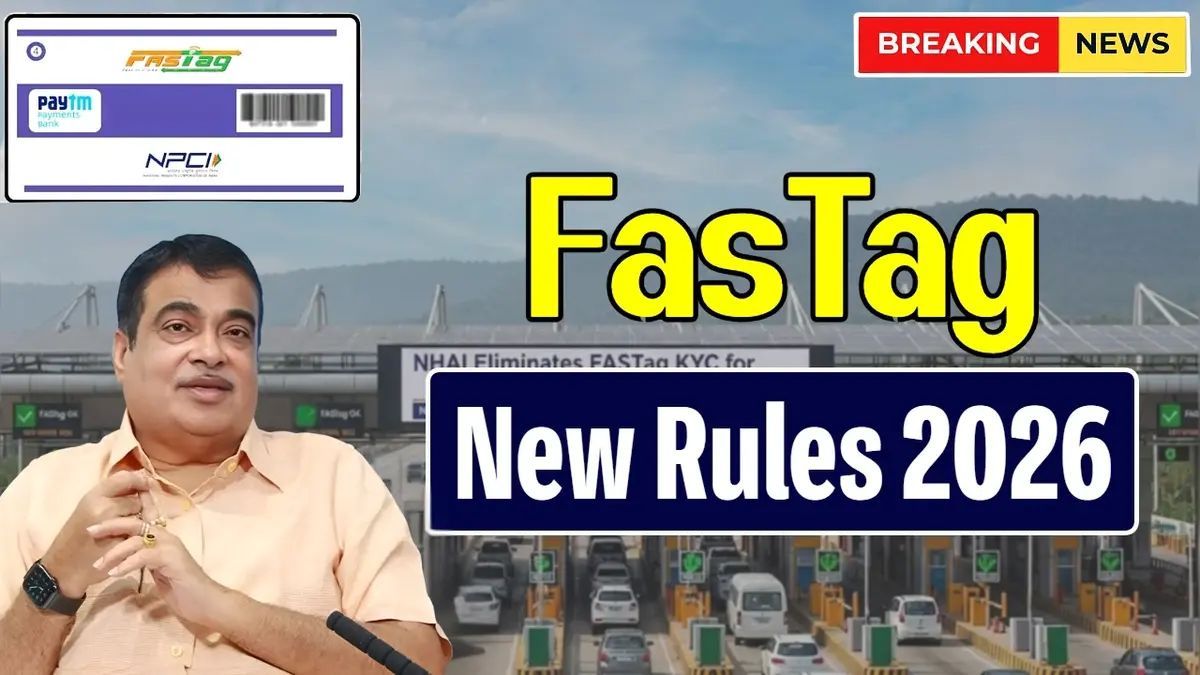
New FASTag Rules – FASTag has become a core part of highway travel in India, helping vehicles pass toll plazas quickly and without hassle. From February 2026, the National Highways Authority of India has rolled out new FASTag rules that every vehicle owner must follow. These changes focus on accountability, transparency, and moving completely toward a digital toll system. Whether you are a regular commuter or manage multiple vehicles, these updates will directly impact your travel experience.
Cash Payments Completely Eliminated
Starting February 1, 2026, cash payments will no longer be accepted at toll plazas anywhere in the country. This move aims to reduce delays, prevent corruption, and make toll collection smoother. Drivers who earlier depended on cash as a backup will now need to keep their FASTag active and adequately funded. The government expects this step to reduce traffic congestion and save fuel by minimizing waiting time at toll booths.
KYC Rules Simplified For Private Vehicles
Private vehicle owners will benefit from simpler KYC requirements under the new rules. Earlier, users often had to submit documents multiple times, but now issuer banks will verify details directly using the VAHAN database. Once the FASTag is activated, it can be used immediately without repeated checks. However, KYC may still be required in cases of misuse, wrong issuance, or duplicate FASTags.

Suspension For Misuse And Fraud
The updated guidelines bring stricter action against misuse and fraud. If a FASTag is transferred between vehicles, linked with incorrect documents, or used for fraudulent activities, it can be suspended. Repeated violations increase the risk of longer suspensions. This step is meant to stop unfair practices and ensure that only genuine users benefit from the system.
Faster Travel With Digital Tolling
With cashless tolling becoming mandatory, highway travel is expected to become faster and more efficient. FASTag-enabled vehicles can pass through toll plazas within seconds, significantly reducing queues. This digital system also allows authorities to track toll transactions more accurately. For drivers, it means less waiting time and a smoother overall travel experience.
Impact On Commercial Transport
Commercial vehicles like trucks and buses will be affected more by these changes because they pass through multiple toll plazas every day. Any FASTag suspension due to violations can cause serious delays and financial losses. Fleet operators are advised to ensure all FASTags are properly updated and that drivers are trained to use them correctly to avoid disruptions.

Benefits For Genuine Users
For honest users, the new FASTag rules bring clear advantages. Removing fraudulent tags will lead to smoother toll operations. The cash ban reduces arguments and confusion at toll plazas, while strict enforcement ensures fair use. Overall, compliant users can expect a more reliable and transparent tolling system.
Technology Driving The Change
Technology plays a major role in the updated FASTag system. Issuer banks now rely on the VAHAN database to verify vehicle registration details before activating a tag. This prevents duplication and incorrect issuance. With advanced monitoring systems, misuse can be detected quickly, making the entire tolling network stronger and more secure.
Preparing For The Transition
Vehicle owners should start preparing early to avoid last-minute problems. Completing KYC if required, updating documents, and keeping sufficient balance in the FASTag account will help ensure smooth travel. Transport companies should also review all FASTags under their fleet and address any compliance issues before the new rules are fully enforced.

Environmental And Economic Impact
Banning cash payments goes beyond convenience and brings environmental and economic benefits. Shorter waiting times mean lower fuel consumption and reduced emissions. Faster movement of goods also helps businesses save time and operational costs, making the transport system more efficient and competitive.
Public Response And Challenges
While many people welcome fully digital tolling, some concerns remain. Drivers in rural areas or those unfamiliar with digital payments may face difficulties initially. Creating awareness and offering support will be important. Banks and toll operators must also ensure that technical issues are minimized to maintain trust in the system.
Conclusion
The FASTag guidelines for 2026 represent a major shift in India’s toll collection system. With cash payments banned, simplified KYC, and strict penalties for misuse, the focus is on a fully digital and transparent network. Although some challenges may arise, the long-term benefits of smoother travel, reduced fraud, and environmental savings make this change worthwhile.
यह भी पढ़े:
 Government Rolls Out 7 Major Facilities for the Elderly Under Senior Citizen Card Benefits
Disclaimer
This article is intended for general informational purposes only and does not replace official notifications or circulars issued by authorities. FASTag rules, timelines, and enforcement may change. Readers are advised to verify all details directly from official NHAI, bank, or government sources before making any decisions.